By HDTI High-Temperature-Heat-Pumps and
Ultra-High-Temperature-Heat-Pumps
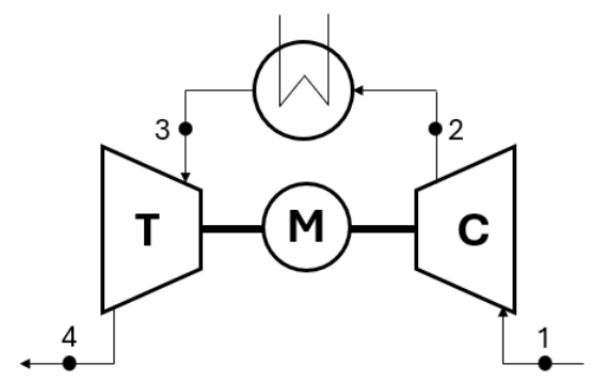
Reverse Brayton Cycle System (1-2) compression, (2-3) heat rejection, (3-4) expansion
In the reverse Brayton cycle considered the working fluid is compressed (1-2) by the compressor stage of a rotating turbomachine employing a hybrid drive, i.e. by turbine expansion (T) and by the electric motor (EM) attached on a single shaft; the compressed hot gases then flow through the heat exchanger (HEX), reducing their temperature by rejecting heat (2-3) to the process fluid. Finally, the fluid expands (3-4) through the turbine stage (T), generating part of the power necessary to drive the compressor, before being exhausted (considering an open loop system such as shown in Figure 1).
HDTI provides comprehensive support across the entire development process from early concept feasibility to full product maturity and plant optimisation. We combine engineering expertise with deep system understanding to help you achieve maximum performance and reliability.
Plug-and-play replacement of fossil-fuel powered equipment like ovens or steam boilers by high-temperature-heat-pumps.
Reducing the energy demand of hydrogen production in hot steam electrolyzers or ammonia crackers.
Upgrading of low-grade thermal energy to industrial demands. Cooling power as byp-product.
Decarbonisation of industrial drying processes using HDTI high-temperature-heat-pumps.
We are acting as development leader offering engineering services for integrating High-Temperature Heat Pumps into plant operation. Working as developer and supplier of the turbomachinery unit used in Reverse Brayton Cycle High-Temperature Heat Pumps we have a strong focus on minimising CAPEX and are moving towards becoming the HTHP supplier. Contact us for more info.
Website Software